Walk into any plant running both systems and you will hear the same debate: is a palletizing robot really better than a well-run traditional station? The honest answer depends on shifts, formats and budget — and the comparison is more boring, and more decisive, than most buyers expect.
This page summarises how a palletizing robot is applied to robotic Palletizer vs Traditional Palletizers: Which Is Better for Your Business?, what a typical layout looks like, and which points decide whether the project pays back.
Why This Application Matters
Robotic Palletizer vs Traditional Palletizers: Which Is Better for Your Business? lines share the same pressures: labour at the end of the line is hard to keep, formats change more often than they used to, and unstable pallets cost money in transport and claims. A palletizing robot addresses all three at once — it runs through breaks and shift changes without fatigue, stores every pallet pattern as a recipe, and stacks each layer to the same tolerance.
- Consistent patterns. Every layer is placed by the robot, so pallet quality does not depend on who is on shift.
- Flexible formats. New carton sizes are added by recipe, not by rebuilding the station.
- Predictable throughput. The cell runs at a stable rate, which makes upstream scheduling realistic.
A Typical Line Layout
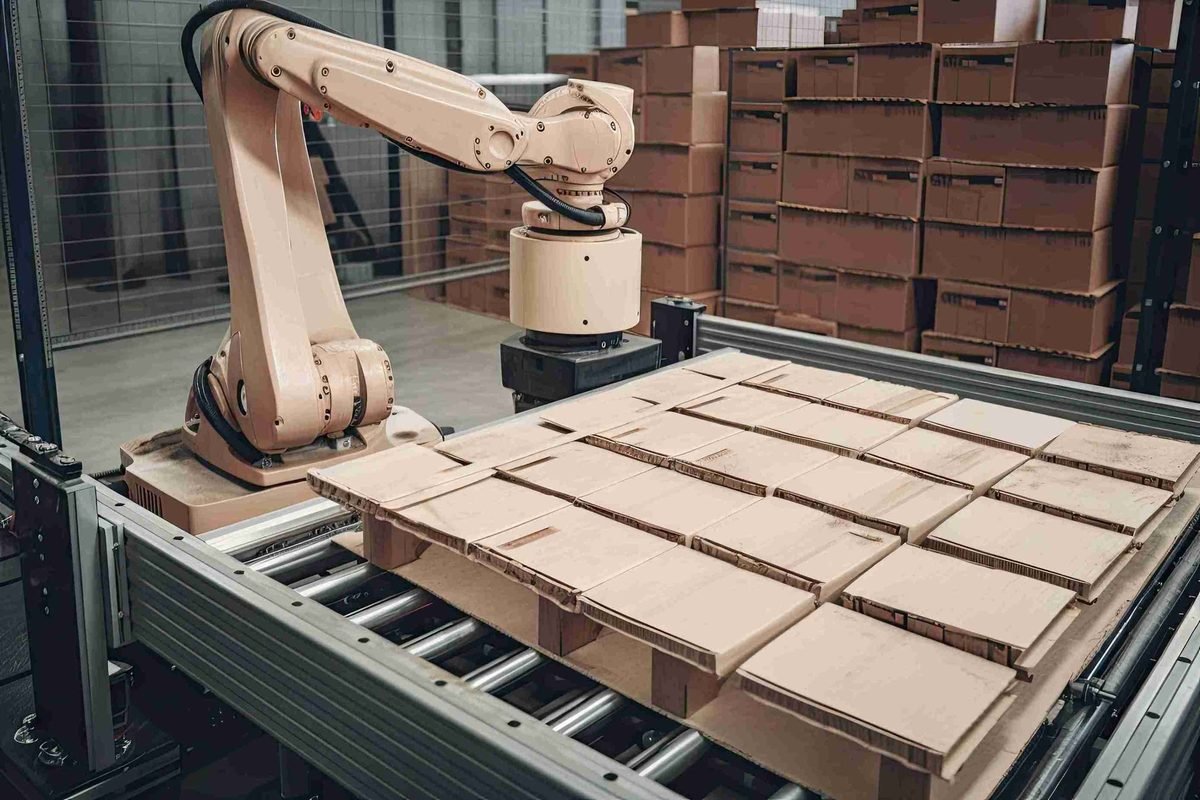
Most installations we deliver follow the same skeleton: cases arrive from the sealer, a conveyor accumulates and squares them, and the robot picks full layers or single boxes onto the pallet. Where space is tight, the pallet is built on a rotating table; where throughput is higher, a pallet dispenser and stretch wrapper are added inline.
What Decides Success
Three points decide most projects of this kind:
- The hardest carton. Specify the gripper and pattern around the most difficult pack you run, not the average one.
- The real format list. Count every carton size, including seasonal and promotional packs, before quoting.
- Upstream stability. A robot repeats the process it is given; sealing and labelling upstream must be stable first.
Rule of thumb
If the manual station currently needs two or more operators per shift, or the line runs more than two shifts, a robotic cell is usually the economical option — request a cycle-time simulation with your real carton list before deciding.
Summary
Robotic Palletizer vs Traditional Palletizers: Which Is Better for Your Business? palletizing is a proven, low-drama project: standard equipment, a cell footprint measured in square metres, and results that are easy to verify within the first week of running. Start with a product list and a workshop sketch — that is enough for a layout proposal and an honest payback estimate.
Frequently Asked Questions
A single-robot cell typically handles 8–12 cases per minute on standard cartons; the exact figure depends on pattern, pallet height and gripper type. We confirm it with a cycle-time simulation before quoting.
A self-contained cell is normally installed and commissioned in 1–2 weeks, excluding shipping. Lines that add a pallet dispenser or stretch wrapper take proportionally longer.
Rarely. The cell is specified around your existing cartons and pallets; only badly sealed or unstable packs usually need attention upstream.