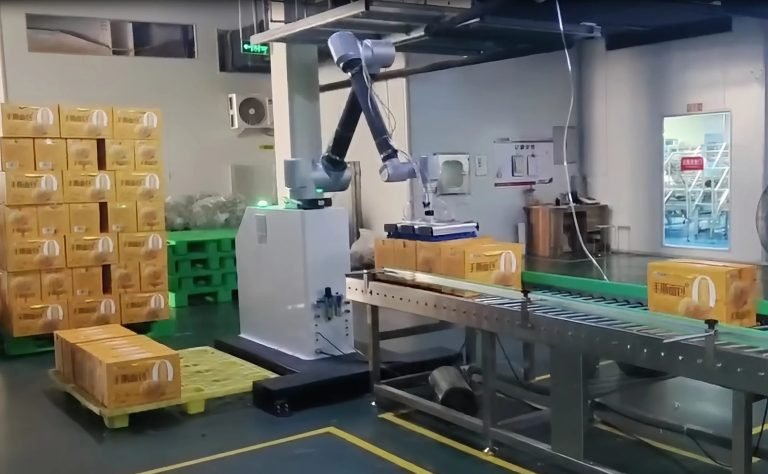
Why This Matters on the Line
The short answer is arithmetic and rhythm. Whatever the technology, the value of industrial robotics development only shows up when it removes a real cost from every shift — not when it looks impressive in a single demonstration. Our engineers start every review by separating the cost that is visible on the invoice from the cost that hides in overtime, rework and unhappy operators.
- Measure the real average, not the best shift.
- Count every position the station consumes.
- Check what the bottleneck costs per hour.
Those three points decide most projects. When any two of them are true at the same time, a structured study usually pays for itself before any equipment is ordered.
Where the Decision Usually Goes Wrong
Buyers rarely regret the robot. They regret the assumptions that were never written down. Three of them come up again and again.
1. Specifying on the best case
Quotes are often built on the fastest product and the best shift. Real lines run slower formats, changeovers and short stoppages. A specification that survives only the best case will under-deliver every ordinary day.
2. Leaving the hand-off to chance
Every automated cell has a point where upstream and downstream equipment hand work over. If that point is not designed, the line waits there — and the wait shows up as lost capacity, not as a fault.
3. No owner after commissioning
Equipment that nobody on site can adjust becomes a black box. Training and simple documentation are not extras; they are what keeps industrial robotics development running in year three.

A Quick Self-Assessment
Score your own situation against the table below. Two or more “act now” answers means the study is worth doing.
| Indicator | Comfortable today | Act now |
|---|---|---|
| Labour tied up in the manual station | 1–2 shifts | 3 shifts, incl. weekend |
| Operator turnover (12 months) | Under 15% | Over 25% |
| Repeatability of the current process | Stable, documented | Depends on who is on shift |
| Product formats sharing the area | 2–4 stable formats | 6+ formats, or frequent launches |
| Rework / reject rate | Under 0.5% | Over 2% |
| Space available for equipment | Tight, no free corner | A cell can be released |
What It Costs — and What It Returns
A complete solution is never just the headline machine. Budget for the whole package:
- The machine itself — sized by payload, reach and cycle time, not by brochure pages.
- Tooling and interfaces — the parts that decide whether one system can handle all your formats.
- Conveying and buffering — so the unit never waits for product or packaging material.
- Safety, guarding and documentation — non-negotiable in most export markets.
- Integration, programming and training — where cheap projects quietly become expensive ones.
Compare that with the cost of the positions the station consumes, the overtime to cover a peak season and the output you currently lose to changeovers. On a single-shift operation the maths is much tighter — which brings us to the honest part.
When It Is the Wrong Answer
If your team rebuilds the process from scratch every time the product changes, automation will not fix the problem — standardising it will. Automate a chaotic process and you simply get chaos at a higher speed.
OK Engineering Team
Rule of thumb
Automate the step that limits your output and hurts your people — not the step that looks most impressive in a trade show video.
How to Proceed
If two or more signals apply, this is the sequence we recommend before any money is committed:
- Record 60 seconds of video of the current station at normal speed, plus a sketch of the workshop with dimensions marked.
- Send the product list — unit size, weight, layer count and required output.
- Ask for a calculation, not a brochure. Our engineers return a layout drawing with cycle time and the number of operators needed afterwards.
- Test the tooling before shipping where the packs are difficult — a sample run removes most of the risk.
Frequently Asked Questions
Start from the positions the station consumes across all shifts, then add the cost of rework, downtime and overtime. That figure is what any new equipment has to beat. Send us your numbers and we will tell you honestly whether the case is close or clear.
Yes, and that is usually the point. Formats are stored as recipes and selected by the operator; changing over normally takes a tooling change plus a recipe selection, not a rebuild.
No. Day-to-day operation is start, stop, recipe selection and load handling. We train your team so you are not dependent on us for routine changes.
Standard warranty plus remote support for software and alarms. Depending on your location we can also quote on-site service visits or an annual maintenance plan.